Jumat, 26 November 2010


Kamis, 25 November 2010


Rabu, 17 November 2010






Senin, 15 November 2010
Body Art and History of Power Man
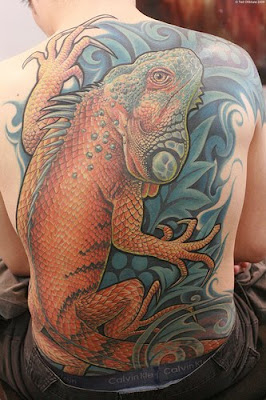 Man has enthusiastically decorated his body for thousands of years, and some of these decorations can leave the onlooker gasping in amazement at their intricacy and sheer beauty. Often the wearer of the tattoos is making a statement of some sort. Indeed, the very word tattoo is said to stem from the Polynesian word ‘ta’ meaning 'striking something' and the Tahitian word ‘tatau’ meaning ‘to mark something’.
In 1991, the body of a 5,000-year old tattooed man – ‘ötzi the ice man’ – was found frozen in a glacier in the mountains between Austria and Italy. The wonderfully preserved skin of this corpse bears 57 tattoos which are thought to have been medicinal in application, comprising a cross on the inside of the left knee, six straight lines above the kidneys and numerous parallel lines on the ankles.

These often elaborate geometrical designs were added to and embellished throughout the life of the individual until they covered the entire body. Samoan traditions of applying tattoos by hand were always dependent upon rank and title. Tattooing ceremonies, conducted at the onset of puberty, were elaborate affairs and a key part of the individual's journey to leadership. The first Europeans to see this were from a 1787 French expedition, which reported that ‘the men have their thighs painted or tattooed in such a way that one would think them clothed, altBody Art and History of Power Man hough they are almost naked’.

Celtic culture of 1200 to 400BC was very keen on body art. Body painting was done with woad, leaving a blue design on the skin. Spirals were common, and lines forming complex braids which weave across themselves symbolise the connection of all life.
Eleventh century tattooed Inca mummies were unearthed in Peru. Central American natives see tattoos as badges of courage. When Cortez arrived in Mexico in 1519 he discovered the natives not only worshipped devils in the form of statues and idols, but had also imprinted images of these 'false' idols on their skin. The Spaniards, knowing nothing of tattooing, thought it to be the work of the devil.
Sabtu, 13 November 2010
Feminine Tattoos Design

When opting colors for feminine tattoos, women can go two dissimilar ways with their choices. They can have feminine colors match the trend of tattoo or they can have design arts stronger and bold colors in place. When going with the feminine color schemes, there are a few colors that instantly spring to mind. Pink and baby blue are two colors that seem pretty together and would also add a little additional femininity to an already feminine tattoo.


Langganan:
Postingan (Atom)


